Blog Outline

In 52 brief snapshots we will try to paint a picture of Jesus as hinted at, indicated, outlined and glimpsed in the Old Testament. We will not be providing a comprehensive study but we hope it will be both accessible and helpful to you and serve to deepen both your understanding of, and relationship with, the greatest man who ever lived.

Wednesday, 15 June 2016

Resurrection

Psalm 16:1-11

It is often the case with Old Testament literature, such as the Psalms, that the author writes something pertinent to their current situation but containing echoes of truths which only become fully clear much later. Psalm 16 is such an example.

Written by David as an acknowledgment of the protection, security and blessing of the Lord, he talks about how he has prioritised and pursued God as his Lord. This leads to the wonderful juxtaposition of the two phrases in verse 8:
‘I have set the Lord continually before me;
Because He is at my right hand, I will not be shaken’.

We know that David was far from perfect but this verse gives an overall summary of his life: he sought the Lord and the Lord was with him. He continues in v11 to describe his belief that seeking and finding God’s presence is something that would continue throughout this life AND forever (v11).

However, this leads to a conundrum. Given the limitations of the human body and the certainty of physical death, how can someone live on into eternity? David has a firm belief that God is capable of arranging this and will do so: ‘For You will not abandon my soul to Sheol; Nor will you allow Your Holy One to undergo decay’. (v10). David is convinced that even in death he will not be separated from God. He is certain that God’s pleasures are forever despite his physical frailty.

In this Psalm it is God’s Holy One who is not abandoned to death. In the New Testament we read that Jesus was not allowed to suffer decay. Instead, He was rescued from death, raised to life and resurrected for glory. Peter, in his monumental Pentecost sermon, proclaimed that it was impossible for Jesus to be held in the power of death before quoting this Psalm (see Acts 2:24-28) and saying that David, ‘looked ahead and spoke of the resurrection of the Christ’ (v31). Paul, too, quotes Psalm 16:10 before saying, ‘but He whom God raised did not undergo decay’ (Acts 13:35-37). This Psalm is clearly important in the message of the early church.

The idea of a man who whose body would not simply decay in the ground is a revelation of the highest order and points us inexorably to Jesus who was ‘raised on the third day according to the Scriptures’ (1 Corinthians 15:4). And ‘if the Spirit of Him who raised Jesus from the dead dwells in you, He who raised Christ Jesus from the dead will also give life to your mortal bodies through His Spirit who dwells in you.’ (Romans 8:11)

This applies to us too. We can have a share in that resurrection!

Further reading:         Acts 2:14-42

Worship Video:


To think about:
God says he will never leave us but have there been times when you thought you had been abandoned by God? How did you find out that you hadn’t been abandoned?

Creative response:
Photo by Bernice


Please remember to go back to previous blog posts to see the creative responses that have been added. Click on the thumbnail pictures to view them.

Please share your creative response using the linky below. To use the linky click on 'Click here to enter'. You will need the URL from your own blog or from a photosharing website like Flickr. Alternatively share your response in the Facebook group.

Wednesday, 8 June 2016

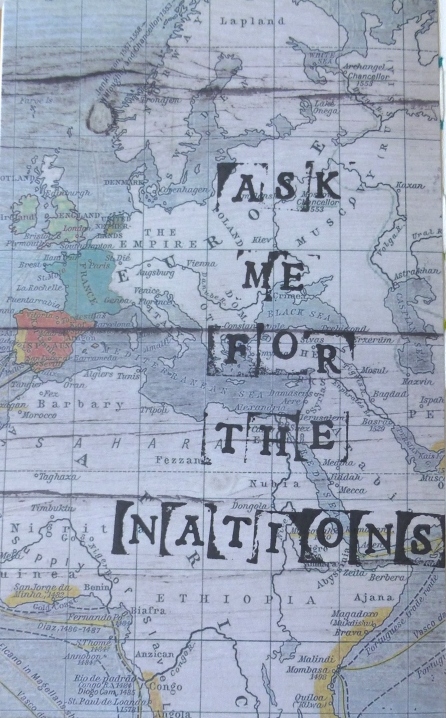
The son who becomes king

Psalm 2:1-12

Psalm 2 paints a picture of earthly kings standing in opposition to God (vv1-3). Their plan to rule while ignoring Him will prove to be a futile exercise and, as verses 4&5 indicate, will not end well for these arrogant rulers.

God has a different plan! His plan involves the installation of His own King in Zion (v6). So who is this King?

All is revealed in verse 7: ‘You are my Son, today I have begotten You’. The King who will be appointed by God is His very own Son. Paul quotes this verse when he is preaching in Pisidian Antioch, linking it directly to the resurrection of Jesus when he says, ‘…God has fulfilled this promise to our children in that He raised up Jesus, as it is also written in the second Psalm, ‘You are my Son, today I have begotten You.’ (Acts 13:33). This implies that the appointment of Jesus as King is linked to Him being raised from the dead, as this demonstrated His conquering of all enemies, the last one of which is death (see 1 Corinthians 15:26).

Not only this, but His Son is told that He can ask and will be given ‘the nations for His inheritance and the ends of the earth for His possession’ (v8) and the opposing nations will be crushed and shattered (v9). This idea of inheritance is something the writer to the Hebrews picks up on. The epistle opens with a description of the supremacy of Jesus. He is described as being far greater than the angels because ‘You are my Son, today I have begotten You’ (Hebrews 1:5, quoting Psalm 2:7) and He has ‘inherited a more excellent name’ (1:4).

The king the psalmist describes is not going to be a normal king. He will be the Son who becomes King!

The Psalm then finishes with a reminder that God is worthy of worship, His Son is worthy of honour, and that there is safety for those who seek Him (vv10-12). This is not some tyrant who will be appointed as King, but a righteous ruler who will provide both judgment and mercy.

Further reading:       Hebrews 1:1-14

Worship Song:


To think about:
In Romans 8:17 we are told we are co-heirs with Christ. In light of that and the study today where Jesus is given the nations as His inheritance, what is our inheritance in Jesus?

Creative response:
Journal page by Bernice


Please remember to go back to previous blog posts to see the creative responses that have been added. Click on the thumbnail pictures to view them.

Please share your creative response using the linky below. To use the linky click on 'Click here to enter'. You will need the URL from your own blog or from a photosharing website like Flickr. Alternatively share your response in the Facebook group.

Wednesday, 1 June 2016

My Redeemer Lives

Job 19:22-29

Job is a book all about one man’s response to the suffering he undergoes. Job’s faith in God is put under the spotlight as his life falls apart as he loses his family, possessions and health. The account of the interchanges between Job and his friends covers many different themes but it is peppered with revelation of who God is and what He is like. Chapter 19:25-26 could be described as the high watermark of the book as Job articulates a significant truth about God.

In verse 25 Job declares, ‘My Redeemer lives and at the last He will take His stand on the earth’. This is significant on a number of fronts. Firstly, the Redeemer is alive! Job is not basing his hope of redemption on something abstract or remote. His hope is in the Living God as his Redeemer! The redemption he talks about is that he will be justified in some way. He has earlier declared that God is his witness and advocate (see 16:19) and so when the charges are read against him he will be vindicated. This thought is now included in the idea of his redemption.

Secondly, the Redeemer will stand on the earth. At the end of all things, the Redeemer will arrive and take His stand on the earth. Not just stand on the earth, but take His stand. There is a combative element as the Redeemer deals with anything that is going to jeopardise the redemption.

Thirdly, Job believes that there is life after death which he will experience, and he will obtain a renewed body of some sort. In verse 26 he says, ‘Even after my skin is destroyed, yet from my flesh I shall see God.'

Fourthly, Job believes he will see God. That is incredible, given that no-one was meant to able to see God and live! In contrast, Job believes that his Redeemer will become visible to him after his life on earth is finished.

It sounds to me like Job has caught a significant glimpse of Jesus, the Great Redeemer, and the work He will do in our redemption and in guaranteeing our future resurrection!

Further reading:      1 Corinthians 15:50-57        1 Thessalonians 4:13-18

Worship Video:


To think about:
Job received a significant revelation of Jesus as Redeemer. What revelation of Jesus have you received recently and how has this affected your relationship with Him?

Creative response:
Photo by Bernice


Please remember to go back to previous blog posts to see the creative responses that have been added. Click on the thumbnail pictures to view them.

Please share your creative response using the linky below. To use the linky click on 'Click here to enter'. You will need the URL from your own blog or from a photosharing website like Flickr. Alternatively share your response in the Facebook group.

Wednesday, 25 May 2016

Interceding for a nation

Esther 4:1-5:1

The book of Esther tells of a remarkable young Jewish girl who became queen of Persia and Media. The story is full of intrigue with colourful characters and a plot line with many twists and turns. It is well worth sitting down and reading all of the 10 short chapters in one sitting!

Esther was a Jewish orphan (2:7) brought up in exile in Susa by her cousin, Mordecai. King Xerxes was looking for a new queen and, through a rigorous selection procedure, Esther was selected as queen (2:8-20).

Haman was one of Xerxes most-trusted advisors who developed a hatred of the Jews (3:1-6). He designed a scheme for annihilating the Jewish people (3:7-15) which he managed to get approved by the king. The massacre-date was set down in law and notification sent to every province informing them of when the people of each province could ‘destroy, kill and annihilate all the Jews, both young and old, women and children…and seize their possessions as plunder’ (3:13).

Mordecai heard of the plan and sent word to Esther. He begged her to speak to the king on behalf of her people, the Jews. The problem was that custom dictated that no-one, not even the queen, could go into the king freely. In fact, if Esther did approach the king uninvited she would die unless he chose to hold out his golden sceptre towards her. At this point Esther had not been summoned to the king for 30 days (4:11).

However, Esther recognised the severity of the situation and agreed to approach the king. She asked Mordecai to gather people to pray and fast for her and she and her friends did the same (4:15-17). On the third day Esther approached the king (5:1) who graciously welcomed her into his presence. Eventually disaster is averted (9:1).

Esther was willing to risk her own life in order that there was a chance others could be saved. She gathered others around her to fast and pray and then faced death for the salvation of others. Jesus in Gethsemane gathered some faithful friends around Him to pray as He faced death for the sake of others.

But whereas Esther was spared death and saved many, Jesus had to endure death in order to save.

‘Greater love has no one than this, that one lay down his life for his friends’ (John 15:13).

Further reading:    Romans 5:6-11     1 Timothy 2:5-6      1 John 2:1-2

Worship Video:

To think about:
We often quote the phrase ‘for such a time as this’ in relation to our impact on people or on an event. Think about the occasions when you have felt that you were precisely where you were supposed to be in God’s plan for your life?

Creative response:
Journal page by Bernice


Please remember to go back to previous blog posts to see the creative responses that have been added. Click on the thumbnail pictures to view them.

Please share your creative response using the linky below. To use the linky click on 'Click here to enter'. You will need the URL from your own blog or from a photosharing website like Flickr. Alternatively share your response in the Facebook group.

Wednesday, 18 May 2016

The veil

2 Chronicles 3:1-14, Exodus 26:31-35

The temple was built so that God would have a place to dwell amongst His people. It became the central hub and focus of Israelite worship. It was built on the model of the tabernacle which was the magnificent tent God had designed while the Israelites dwelt in the desert. Many artefacts and objects were created for the tabernacle and temple. Each of them was designed for a specific purpose and the whole tabernacle pointed the people towards God and enabled them to worship in a way which honoured and magnified Him.

The veil was one of these objects. It was 60 feet high and 30 feet wide and was made ‘of violet, purple, crimson and fine linen’ and had cherubim worked into the design (2 Chron 3:14). It would have been a magnificent sight, a huge wall of royal colour, resplendent with angelic designs woven into its rich fabric. Although not easily viewed by the people since it was inside the Holy Place, it would have been known about as it was extremely significant. The key purpose of the veil is described in Exodus 26 where we read that ‘the veil shall serve for you as a partition between the holy place and the holy of holies’ (v33). The ‘holy of holies’ or ‘Most Holy Place’ was a 30 foot cube which contained two huge cherubim with 15 feet wingspans and in between was the ark of the covenant. On top of the ark was the mercy seat while inside the ark were the two stones on which the ten commandments were written, a golden jar containing some manna and Aaron’s rod that budded (see Hebrews 9:4).

However, the main feature about the Holy of Holies was that it was the place where the presence of God dwelt. This meant that no one was allowed to enter it except for the High Priest and even then, only once per year. The veil signified the separation of God from man. It symbolised how the sinfulness of mankind meant that the holiness of God was beyond reach.

And so it is incredible when we read in the gospels that as Jesus died ‘the veil of the temple was torn in two from top to bottom’ (Matthew 27:51). This is a moment when things changed! Given the height of the veil, the tearing is an act that only God could do. And suddenly the way into the presence of God is cleared. The veil is torn.

The writer to the Hebrews phrases it powerfully in chapter 10:19-22 by saying that we now have confidence to enter the holy place because of Jesus who replaced the veil with His body on the cross. The veil is torn. The veil is removed. We have access to the very presence of God.

Further reading: Hebrews 9:1-10 & 10:19-22

Worship Video:
 

To think about:
How do you enter the presence of God? What helps you to spend time with God?

Creative response:
Journal page by Bernice


Please remember to go back to previous blog posts to see the creative responses that have been added. Click on the thumbnail pictures to view them.

Please share your creative response using the linky below. To use the linky click on 'Click here to enter'. You will need the URL from your own blog or from a photosharing website like Flickr. Alternatively share your response in the Facebook group.

Wednesday, 11 May 2016

Solomon's wisdom

1 Kings 10:1-10

Solomon, David’s son, succeeded him as king. Solomon’s reign was characterised by wealth and wisdom. He spent 7 years building a temple and 13 years building a palace which left observers lost for words at their grandeur.

Solomon’s wisdom was a gift from God. 1 Kings 3 tells the account of God appearing to Solomon in a dream and asking him, ‘What do you wish Me to give you?’ (v5). Solomon answered, ‘Give your servant an understanding heart to judge Your people to discern between good and evil’ (v9). This answer pleased God (v10)! He promised to give him, ‘a wise and discerning heart, so that there will be no one like you before you, nor shall one like you arise after you’ (v12) and also ‘riches and honour’ (v13).

The wisdom God gave Solomon was jaw-dropping! Not only was he able to wisely judge difficult legal cases (see 1 Kings 3:16-28 for an example) but he also spoke 3,000 proverbs and had 1,005 songs, as well as being able to speak about trees, plants, animals, birds, insects and fish (1 Kings 4:29-33).

Word spread regarding Solomon’s wisdom and people travelled far and wide to hear him speak (1 Kings 4:34). Amongst these visitors was the Queen of Sheba (1 Kings 10) who was amazed by his wisdom. However, crucially she observed that it was God who was to be blessed. She said that because of His love for Israel God had granted Solomon wisdom in order that he could ‘do justice and righteousness’ (v9).

The fact that a rule of justice and righteousness could only be established by wisdom from God is crucial to what we see realised in Jesus. Jesus, like Solomon, continually astonished the crowds He spoke to with His wise and incisive teaching that came with authority (see Matthew 7:28-29, 13:54, 22:33; Mark 1:22, 6:2; Luke 4:32; John 7:46 for some examples). Crowds travelled in order simply to hear Him teach. In this regard Matthew 12:42 cites the challenge that the example of the Queen of Sheba gives to people. She was willing to seek out the God-given wisdom Solomon had. In Jesus we have a far superior example, but do we recognise this?

Solomon’s wise reign hints at something far greater. In Jesus we see the One who is full of wisdom and who will reign in justice and righteousness.

Further reading:      Luke 2:41-52      Matthew 12:38-42

Worship Video:


To think about:
James 1: 5 tells us: “But if any of you lacks wisdom, let him ask of God, who gives to all generously and without reproach, and it will be given to him.” Have you ever asked God for that particular gift?

Have you ever been in a situation when what you said to someone could only have been the wisdom of God?

Creative response:
Journal page by Bernice


Please remember to go back to previous blog posts to see the creative responses that have been added. Click on the thumbnail pictures to view them.

Please share your creative response using the linky below. To use the linky click on 'Click here to enter'. You will need the URL from your own blog or from a photosharing website like Flickr. Alternatively share your response in the Facebook group.


Wednesday, 4 May 2016

An eternal line of kings

2 Samuel 7:1-16

The nation of Israel, having asked for a king, suffered the legacy of King Saul. He drifted away from following God which led to years of civil war as David established his family as the royal family. David was from the tribe of Judah (see importance of that in ‘The royal line of Judah’ post) and God established his throne and brought peace (v1).

However, God had much bigger plans than a brief period of peace for Israel and in this important chapter we see God speaking through His prophet Nathan of His eternal plans.

God begins His message to David by reminding him of the fact that he was chosen out of obscurity and made king (v8). He reminds David that He has always been with him (v9) with the aim of providing for His people (vv10,11). God goes on to promise that David’s son will sit on the throne and build a temple for God (vv12,13).

But then the prophecy takes things to a whole new level!

Not only is God going to provide an heir to continue the kingly line but he is going to establish the kingdom forever (v13). Yes - FOREVER!! David’s family are going to become an eternal line of kings: ‘Your house and your kingdom shall endure before Me forever; your throne shall be established forever’ (v16). This is not just a figure of speech or hyperbole. When God says, ‘Forever’, He means forever. He is going to make David the head of a line of kings that will rule His kingdom forever and ever.

There is no doubt that this is incredible but I think this is not the most significant aspect of the prophecy. In verse 14 God describes Himself as being a father to the future king and this king being His son. Basically God is saying that He is going to adopt David and his descendants as sons and ensure that His ‘lovingkindness will not depart from him’ (v15). Just let the impact of that sink in. God is preparing to identify Himself with the royal line and establish it as a line of sons whom He will love with an everlasting love.

And this line of son-kings will culminate in the person of Jesus!

Further reading:   Matthew 1:1-17

Worship video:


To think about:
Samuel found David living a life of insignificance and obscurity when he anointed him to be king. We feel the same way about ourselves. We feel insignificant. But God says that we are significant because he has adopted us into His family. Think about the areas in your life where you have made a significant difference in someone else’s life.

Creative response:
Journal page by Bernice


Please remember to go back to previous blog posts to see the creative responses that have been added. Click on the thumbnail pictures to view them.

Please share your creative response using the linky below. To use the linky click on 'Click here to enter'. You will need the URL from your own blog or from a photosharing website like Flickr. Alternatively share your response in the Facebook group.